

Fire Ant Control in Waynesboro, VA
Spring and summer ant activity peaks across the Shenandoah Valley, and fire ant colonies can establish quickly in Waynesboro yards, creating painful stings and property damage that worsens without intervention. Sutton Pest Control connects you with independent local pest control providers who can assess your property and develop a fire ant control plan tailored to your situation. Fast local response means the problem gets addressed before colonies spread further.
When are fire ants active in Waynesboro, VA?
Seasonal advice is usually written for the whole country. These are the published figures for the species, placed next to the measured climate for this city specifically.
“Foraging activity slows when soil temperature is lower than 65 to 70 °F or higher than 90 °F.” UGA Extension
“Mating flights are most common in spring and fall.” UGA Extension
Because that is a temperature rule rather than a date, it can be read directly against the local figures below — the months that cross 90 °F are the months when foraging slows at the top end.
Waynesboro averages 7.9 days at or above 90 °F in July — the stretch when UGA's upper limit is being crossed — and 18 such days across the year.Source: NOAA 1991-2020 Climate Normals, WAYNESBORO WTP, VA US station (1.1 mi from Waynesboro)

Fire Ant Control Solutions for Waynesboro Homeowners
Waynesboro's warm growing season creates ideal conditions for fire ant colonies to establish and thrive, particularly as temperatures rise through spring and into summer months. These aggressive insects build visible mounds in yards, landscaping, and around foundations, and their painful stings pose a real threat to children, pets, and anyone working outdoors. Property owners across Waynesboro—from neighborhoods like Oak Hill to Tree Streets and beyond—face ongoing pressure to manage fire ant populations before infestations become entrenched or expand across their grounds. Early intervention is essential to prevent colonies from multiplying and spreading to new areas of your property.
Sutton Pest Control connects Waynesboro homeowners with independent local pest control providers who understand fire ant behavior and treatment timing specific to the region. These providers assess your property thoroughly, identify active colonies and high-risk zones, and apply targeted control methods designed to disrupt established populations. Follow-up visits and monitoring help ensure that fire ant activity remains under control through the seasons ahead. When you partner with a local provider through Sutton Pest Control, you gain access to someone familiar with Waynesboro's landscape and climate who can respond promptly and adapt their approach as conditions change.
Why Waynesboro Homeowners Choose Sutton for Fire Ant Control
Local Fire Ant Expertise
Sutton connects you with independent local providers experienced in fire ant control specific to Waynesboro's climate. Their knowledge of local ant behavior and seasonal activity patterns ensures effective, targeted treatment.
Fast Fire Ant Response
Active fire ant colonies demand quick action. Sutton's network of local providers prioritizes fire ant control requests, connecting you with available specialists who can assess and address infestations promptly.
Thorough Fire Ant Treatment Plans
Effective fire ant control goes beyond one visit. The independent providers in Sutton's network develop comprehensive treatment strategies tailored to your property, addressing colony locations and preventing reinfestation.
Spring & Summer Ant Threat Readiness
In the Shenandoah Valley region, ant activity intensifies during warmer months. Sutton connects Waynesboro property owners with local providers prepared to manage the seasonal surge in fire ant colonies and protect your property.
How Our Fire Ant Treatment Works
Schedule Your Fire Ant Control Visit
Contact Sutton Pest Control to connect with a local fire ant specialist in Waynesboro. Describe the location and extent of fire ant activity on your property so the provider can arrive prepared to assess your infestation.
Assess Fire Ant Colonies and Activity
The local pest control provider inspects your property to locate active fire ant mounds, identify nesting patterns, and evaluate conditions that support colony growth. This assessment determines the best fire ant control strategy for your specific situation.
Execute and Monitor Fire Ant Treatment
The provider applies targeted fire ant control methods to eliminate colonies and prevent reinfestation. Follow-up visits may be scheduled to monitor treated areas and confirm that fire ant activity has been eliminated from your Waynesboro property.
Ready to get rid of fire ants in Waynesboro? A local provider can get started fast.
Call (540) 405-6688Fire Ant Control Across Waynesboro
Fire ant colonies thrive in Waynesboro's warm growing season, and property conditions across the area significantly shape infestation risk and treatment approach. Established neighborhoods with mature landscaping and deeper soil profiles—such as those in Oak Hill and the Tree Streets area—often host multiple colonies that have had years to expand, requiring more thorough detection and control work. Newer subdivisions and properties with recently disturbed soil may experience faster colony establishment, especially during spring and summer when ant activity peaks. Moisture levels, ground cover density, and proximity to utility lines or irrigation systems all influence where fire ants nest and how accessible they are to control measures.
Because fire ant behavior and population growth are closely tied to seasonal warming cycles, timing matters in Waynesboro. Spring and summer bring peak activity, making early identification and rapid treatment critical to prevent colonies from strengthening. The independent local providers Sutton Pest Control connects you with understand these regional patterns and can assess your specific property—whether it's an older established lot in Constitution Park or a newer home on the outskirts—to recommend the right control strategy and timing for lasting results.
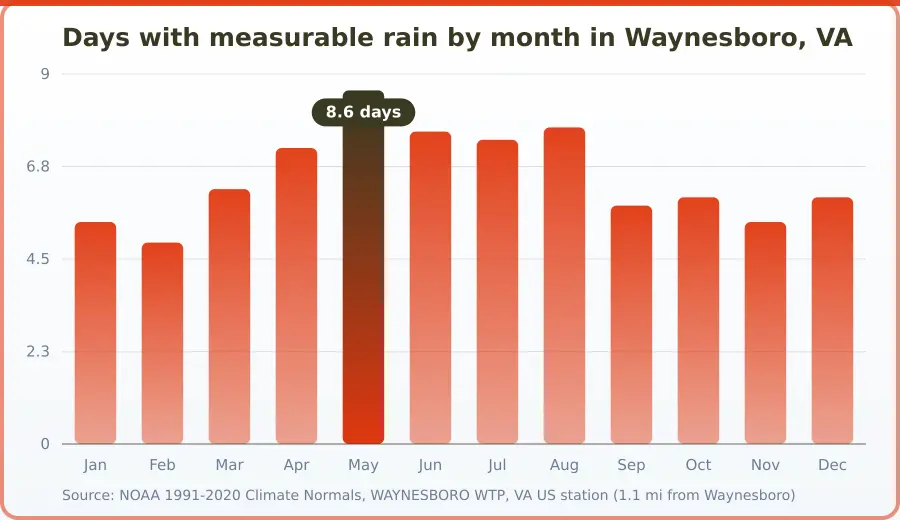
| Period | Days with measurable rain by month (days) |
|---|---|
| Jan | 5.4 |
| Feb | 4.9 |
| Mar | 6.2 |
| Apr | 7.2 |
| May | 8.6 |
| Jun | 7.6 |
| Jul | 7.4 |
| Aug | 7.7 |
| Sep | 5.8 |
| Oct | 6 |
| Nov | 5.4 |
| Dec | 6 |
Source: NOAA 1991-2020 Climate Normals, WAYNESBORO WTP, VA US station (1.1 mi from Waynesboro). Retrieved October 5, 2026.
Fire Ant Control Through Waynesboro's Seasons
Spring: Emergence and Expansion
As soil temperatures warm after April 21's average last freeze, fire ant colonies activate and expand aggressively across Waynesboro yards. Queens lay eggs rapidly, and workers forage widely, making spring the critical window for control before populations peak. Sutton connects you with local providers who address colonies early, reducing summer pressure.
Summer: Peak Activity and Visibility
With 7.9 days above 90°F in July, Waynesboro summers create ideal conditions for fire ant reproduction and aggression. Mounds multiply, stings rise, and colonies defend territory intensely. Local pest control providers accessed through Sutton target active colonies during peak season, when treatment efficacy is highest and protecting family and pets becomes urgent.
Fall: Persistence Before Cold
Fire ants remain active and visible through October 23's average first freeze, working to strengthen colonies and build reserves before dormancy. While brown marmorated stink bugs invade homes this season, fire ants intensify ground activity in yards, gardens, and outdoor spaces around Oak Hill and other Waynesboro neighborhoods. Fall control prevents winter survival and spring rebound.
Winter: Dormancy and Protection
Waynesboro's average 25.8 freezing nights in January force fire ant colonies deep into the soil, where they cluster in dormant survival mode rather than foraging. Cold suppresses activity but does not eliminate colonies; providers help homeowners prepare mounds for spring emergence and plan early-season intervention to stop colonies before they fully activate in warmer months.
Fire Ant Control FAQs — Waynesboro, VA
Fire ant control typically targets mounds and colonies using targeted applications designed to eliminate the queen and workers. Local providers in Waynesboro assess your property, identify active mounds, and apply treatments to nests while taking steps to minimize impact to your landscaping. The process may include follow-up visits depending on infestation severity and the approach chosen by your provider.
Sutton Pest Control connects Waynesboro homeowners with local independent providers who can often respond to active fire ant infestations promptly. Contact us with details about your situation, and we'll match you with a nearby provider ready to schedule an inspection and treatment plan tailored to your property's needs.
Fire ant control pricing depends on mound count, property size, infestation severity, and treatment method selected. Whether your home is in Tree Streets or another Waynesboro area, independent providers will evaluate your specific situation and discuss cost during an initial consultation. Pricing varies by provider and the scope of work required.
Before treatment, clear debris around mounds if safe to do so, keep children and pets away from treatment areas, and mark mound locations for your provider. Let your provider know about any recent pesticide applications, pet areas, or landscaping concerns. They'll give you specific pre-treatment instructions and post-treatment guidelines to follow for best results.
After treatment, monitor your property regularly for new mound activity and report signs promptly to your provider. Reduce moisture around landscaping, remove food sources, and maintain yard cleanliness. In areas like Constitution Park where fire ants thrive, ongoing vigilance and quick treatment of new colonies help prevent re-infestation over time.
Fire ant colonies become most active during warmer months, with spring and summer bringing peak mound-building and foraging behavior in Virginia's climate. Fall and winter slow activity but don't eliminate colonies. If you notice mounds during any season in Waynesboro, early treatment prevents larger infestations before conditions warm and activity intensifies.
Homeowner Safety Toolkit
Verify Your Waynesboro, VA Pest Control Company
Before you hire anyone, use these independent national resources to confirm credentials, standards, and track record.
NPIC
A free, independent hotline run jointly with the EPA and staffed by specialists who can answer specific questions about a pesticide or treatment method before you agree to it.
Ask a QuestionEPA
The federal government's own guide to choosing a pest control method and using pesticides safely around your home and family.
Pesticide Safety GuideNPMA
QualityPro is the pest control industry's own accreditation program, endorsed by the National Pest Management Association. Find and verify a company's accreditation before you hire.
Find a Certified ProRelated Services
Dealing with fire ants in Waynesboro? Get fast, targeted treatment from a local provider.
Call (540) 405-6688Areas We Serve in Waynesboro, Virginia

Coverage centres on Waynesboro, VA and reaches 7 surrounding communities. Response time is what matters most in the hours after a problem is found, so knowing the ground is part of the job.
Waynesboro, VA Information
Tucked where the Blue Ridge Parkway and Shenandoah National Park meet the valley floor, Waynesboro, VA is a small city with a working identity. Generations here have clocked in at the Hershey plant or the McKee Foods bakery that turns out Little Debbie snacks, while Invista's fiber operations and a steady stream of hikers and leaf-peepers round out an economy built on making things and welcoming visitors.
Around 22,200 people call it home, with Augusta Health, the public schools, and city government providing stability alongside manufacturing's long shadow. Neighborhoods like Basic City and the Tree Streets give the place its everyday texture — porches, mountain views, and a community that still feels close-knit despite the big employers in its midst.

Photo: Chris Light, CC BY-SA 4.0