

Centipede Control in Waynesboro, VA
Waynesboro's Shenandoah Valley location brings seasonal pest pressures year-round, including moisture-loving arthropods like centipedes that thrive in damp conditions common to the region. Centipede infestations often indicate underlying moisture or pest activity that requires prompt, targeted control to prevent populations from establishing indoors. Sutton Pest Control connects Waynesboro homeowners with independent local pest control providers who can assess centipede activity and recommend appropriate treatment options tailored to your property.
Centipede Control Services for Waynesboro Homeowners
Homeowners throughout Waynesboro encounter centipedes year-round, particularly when conditions grow damp and temperatures shift with the seasons. These fast-moving arthropods seek shelter in basements, crawl spaces, and ground-level areas where moisture accumulates, making centipede control an important consideration for many properties in the region. While centipedes do prey on other small insects, their presence often signals underlying humidity or pest activity that warrants professional attention. Early intervention prevents populations from establishing and spreading deeper into the home.
Sutton Pest Control connects Waynesboro homeowners with independent local providers who focus specifically on centipede control and the moisture management practices that reduce recurrence. These providers conduct thorough inspections to identify entry points and conducive conditions, then implement targeted treatment strategies tailored to your property's layout and the severity of the infestation. Follow-up visits and guidance on environmental modifications help ensure lasting results. When you reach out to Sutton Pest Control, you'll be matched with a nearby provider ready to assess your centipede problem and outline a clear path forward.
Why Waynesboro Homeowners Choose Sutton for Centipede Control
Fast Local Centipede Control Response
Sutton connects you with independent local providers who understand Waynesboro's pest environment and respond quickly to active centipede infestations. Fast service means faster relief from unwanted indoor activity.
Thorough Centipede Treatment Plans
Connected providers conduct careful inspections to identify centipede entry points and harborage areas, then apply targeted centipede control strategies tailored to your home's layout and your pest concerns.
Clear Communication Throughout Centipede Control
Sutton's provider network prioritizes straightforward explanations of centipede behavior, what to expect during treatment, and follow-up steps. You'll understand your centipede control process from start to finish.
Seasonal Centipede Activity and Prevention
Waynesboro's spring and summer warmth can trigger increased centipede movement indoors. Local providers connected through Sutton help identify and seal entry points before peak activity seasons, reducing future infestations.
How Our Centipede Treatment Works
Schedule Your Centipede Control Visit
Contact Sutton Pest Control to describe your centipede problem and connect with a local Waynesboro pest control provider. The provider will confirm availability and arrange a time to inspect your property for centipede activity.
Centipede Assessment & Treatment Plan
The independent provider conducts a detailed inspection to locate centipede harborage areas, entry points, and moisture conditions that attract them. Based on findings, the provider recommends a targeted centipede control approach tailored to your home's layout and infestation severity.
Centipede Control & Follow-Up
The local provider applies centipede control measures and advises on moisture reduction and sealing entry points to discourage reinfestation. Follow-up visits may be scheduled to monitor the property and ensure centipede activity has been resolved.
Ready to get rid of centipedes in Waynesboro? A local provider can get started fast.
Call (540) 405-6688Centipede Control Throughout Waynesboro and the Valley
Centipede activity in Waynesboro varies considerably based on where you live and the moisture conditions around your property. Older, established neighborhoods with mature tree canopy and aging structures—such as those in areas like Basic City and the Tree Streets—often experience higher centipede pressure due to damp basements, foundation cracks, and leaf litter that creates ideal habitat near homes. Newer subdivisions typically have better drainage and tighter construction, which can reduce but not eliminate centipede encounters, especially during spring and summer when these arthropods are most active and seeking shelter indoors.
Year-round pest activity across the Waynesboro area means centipedes may already be present as secondary invaders following primary pest populations; controlling carpenter ants and subterranean termites can help reduce the food sources that draw centipedes inside. Local independent pest control providers understand how Waynesboro's seasonal shifts and neighborhood-specific moisture patterns influence centipede behavior, allowing them to target both active infestations and conditions that attract them to your home.
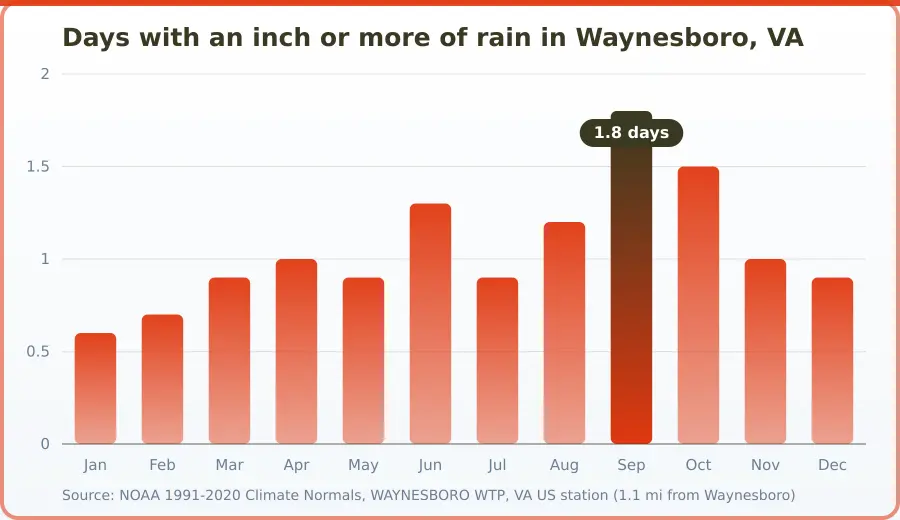
| Period | Days with an inch or more of rain (days) |
|---|---|
| Jan | 0.6 |
| Feb | 0.7 |
| Mar | 0.9 |
| Apr | 1 |
| May | 0.9 |
| Jun | 1.3 |
| Jul | 0.9 |
| Aug | 1.2 |
| Sep | 1.8 |
| Oct | 1.5 |
| Nov | 1 |
| Dec | 0.9 |
Source: NOAA 1991-2020 Climate Normals, WAYNESBORO WTP, VA US station (1.1 mi from Waynesboro). Retrieved October 5, 2026.
Seasonal Centipede Control Throughout Waynesboro's Year
Spring: Active Emergence
As soil temperatures warm after the last freeze around April 21, centipedes become increasingly active and visible in Waynesboro homes and yards. Spring moisture combined with awakening insect populations drives centipedes to hunt more aggressively indoors. Sutton Pest Control connects you with local providers who identify entry points and implement targeted centipede management before populations peak.
Summer: Peak Breeding Season
Waynesboro's summer warmth and frequent rain—averaging 7.4 to 7.9 days with measurable precipitation monthly—create ideal conditions for centipede reproduction and activity. Damp basements, crawl spaces, and mulched garden beds become prime habitat. Local providers reached through Sutton can establish barriers and reduce moisture-loving prey that attract centipedes to your property during these peak months.
Fall: Indoor Migration
As temperatures drop toward the first autumn freeze on October 23, centipedes seek shelter indoors, making fall the season when homeowners most often encounter them in living spaces and storage areas. While carpenter ants and other pests also move inside during this transition, centipedes' rapid movement and nocturnal habits can alarm residents. Sutton Pest Control's network includes local providers experienced in fall centipede exclusion and removal for Waynesboro properties.
Winter: Dormancy and Shelter
Waynesboro's winter cold—with an average of 25.8 freezing nights in January—forces centipedes deep into walls, foundations, and heated basement areas where they remain relatively inactive but persistent. Winter is an ideal time to seal cracks, manage humidity, and eliminate sheltering spots before spring emergence. Sutton Pest Control connects you with providers who can winterize your home's centipede vulnerabilities during slower months.
Centipede Control FAQs — Waynesboro, VA
Centipede control typically includes a thorough inspection of your home's interior and exterior to identify entry points, harborage areas, and moisture conditions that attract centipedes. Local providers then apply targeted treatments to baseboards, cracks, and damp zones where centipedes hide. The goal is to reduce the population and make your home less hospitable to them, though treatment approaches may vary by provider.
Sutton Pest Control connects Waynesboro homeowners with independent local providers who can typically respond to centipede infestations within days. Once you submit your request, local providers in the Waynesboro area review it and contact you to schedule an inspection and treatment plan. Response time depends on current demand and provider availability in your area.
Centipede control pricing depends on factors like the size of your home, severity of the infestation, number of treatment areas, and which methods the local provider recommends. Whether your property requires one-time treatment or follow-up visits also influences cost. The independent provider you connect with through Sutton will discuss pricing details during your initial consultation.
Before treatment, remove clutter from baseboards and storage areas where centipedes hide, and clear access to crawl spaces, attics, and damp zones. Reduce moisture by fixing leaks and improving ventilation—centipedes thrive in humid environments. Your provider will give you specific prep instructions during scheduling. After treatment, plan to keep treated areas undisturbed for the recommended time period.
Minimize moisture by repairing leaky pipes, using dehumidifiers in damp areas, and improving drainage around your foundation. Seal cracks in exterior walls and around windows where centipedes enter. Remove debris piles, wood mulch, and leaf litter near your home's perimeter. Reducing their food sources—like insects in your yard—also makes your property less attractive to centipedes long-term.
Centipedes are most active during warmer months when they hunt actively outdoors, but they often move indoors seeking moisture and shelter during dry periods or temperature changes. In the Shenandoah Valley, seasonal shifts in spring and summer can drive pest activity indoors, making preventive measures important year-round. If you notice centipedes in your home, contacting a local provider promptly prevents populations from establishing.
Homeowner Safety Toolkit
Verify Your Waynesboro, VA Pest Control Company
Before you hire anyone, use these independent national resources to confirm credentials, standards, and track record.
NPIC
A free, independent hotline run jointly with the EPA and staffed by specialists who can answer specific questions about a pesticide or treatment method before you agree to it.
Ask a QuestionEPA
The federal government's own guide to choosing a pest control method and using pesticides safely around your home and family.
Pesticide Safety GuideNPMA
QualityPro is the pest control industry's own accreditation program, endorsed by the National Pest Management Association. Find and verify a company's accreditation before you hire.
Find a Certified ProRelated Services
Dealing with centipedes in Waynesboro? Get fast, targeted treatment from a local provider.
Call (540) 405-6688Areas We Serve in Waynesboro, Virginia

Coverage centres on Waynesboro, VA and reaches 7 surrounding communities. Response time is what matters most in the hours after a problem is found, so knowing the ground is part of the job.
Waynesboro, VA Information
Tucked where the Blue Ridge Parkway and Shenandoah National Park meet the valley floor, Waynesboro, VA is a small city with a working identity. Generations here have clocked in at the Hershey plant or the McKee Foods bakery that turns out Little Debbie snacks, while Invista's fiber operations and a steady stream of hikers and leaf-peepers round out an economy built on making things and welcoming visitors.
Around 22,200 people call it home, with Augusta Health, the public schools, and city government providing stability alongside manufacturing's long shadow. Neighborhoods like Basic City and the Tree Streets give the place its everyday texture — porches, mountain views, and a community that still feels close-knit despite the big employers in its midst.

Photo: Chris Light, CC BY-SA 4.0